
Dental Bridge Options: Fixed, Cantilever & Implant-Supported
Dental Bridge Options: Fixed, Cantilever & Implant-Supported

Explore fixed, cantilever and implant-supported dental bridges, their benefits, costs and suitability. Consult a dentist near you for expert advice. Missing teeth can affect more than just your smile. They may make chewing difficult, affect speech, and allow nearby teeth to shift into the empty space. A dental bridge is one of the common restorative solutions used to replace one or more missing teeth and restore the appearance and function of your smile.
If you are searching for a dentist near me for missing teeth, understanding the different types of dental bridges can help you discuss suitable treatment options with your dentist. At Miracle Health Care Zone Dental Clinic | Aligner Specialist | Dr. Varsha Merani, patients can receive personalized guidance based on their oral health, the location of the missing tooth, bone support, surrounding teeth and overall dental needs.
Table of Contents
What Is a Dental Bridge?
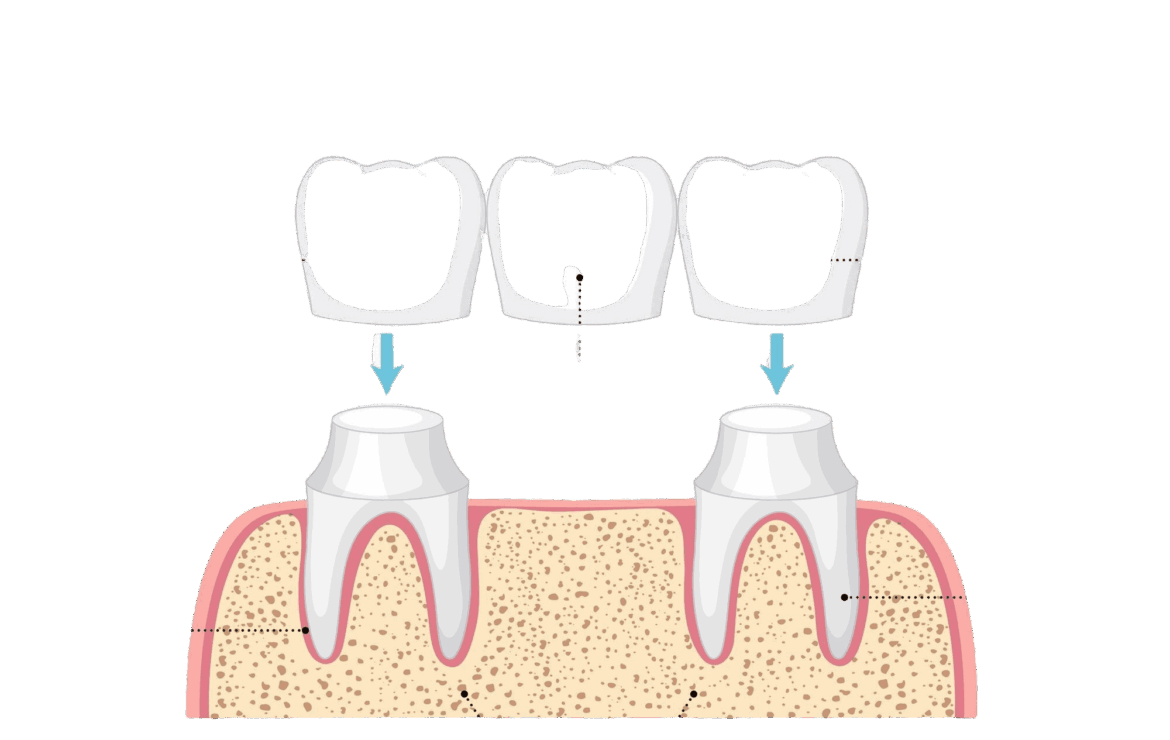
A dental bridge is a dental restoration designed to replace one or more missing teeth. It generally consists of an artificial tooth, known as a pontic, supported by natural teeth or dental implants.
The main purpose of a dental bridge is to:
- Replace missing teeth
- Restore chewing function
- Improve the appearance of your smile
- Support proper speech
- Help maintain the position of surrounding teeth
- Restore better overall dental function
The most appropriate bridge depends on factors such as the number and location of missing teeth, the condition of nearby teeth, gum health and available bone support.
Types of Dental Bridges
There are several types of dental bridges. The three commonly discussed options are fixed dental bridges, cantilever bridges and implant-supported bridges.
1. Fixed Dental Bridge
A traditional fixed dental bridge is one of the most commonly used types of bridges. It typically uses crowns placed over the teeth next to the missing tooth to support the artificial tooth between them.
Benefits of Fixed Dental Bridges
- Provides a stable replacement for a missing tooth
- Restores chewing ability
- Can improve smile appearance
- Does not require daily removal like a removable denture
- Can provide a natural-looking result when properly designed
However, the supporting teeth need to be healthy enough to support the restoration. Your dentist will examine these teeth before recommending this option.
2. Cantilever Dental Bridge
A cantilever bridge is supported by a tooth on only one side of the missing tooth rather than by teeth on both sides.
This option may be considered in specific situations where there is only one suitable supporting tooth.
However, cantilever bridges are not appropriate for every location in the mouth. Because the restoration receives force from one side, your dentist needs to carefully evaluate your bite, tooth position and overall oral health.
A professional dental examination is important before choosing this type of bridge.
3. Implant-Supported Dental Bridge
An implant-supported bridge uses dental implants rather than natural teeth as its primary support.
Dental implants are placed into the jawbone and can provide a stable foundation for the bridge. This option may be particularly useful when multiple adjacent teeth are missing.
Benefits of Implant-Supported Bridges
- Does not depend primarily on neighboring natural teeth for support
- Provides strong and stable support
- Can restore chewing function
- Can offer a natural-looking appearance
- May help preserve the structure of the jawbone around the implant area
Whether you are a suitable candidate depends on factors such as bone volume, gum health, medical history and overall oral condition.
Fixed vs Cantilever vs Implant-Supported Dental Bridge
| Feature | Fixed Bridge | Cantilever Bridge | Implant-Supported Bridge |
|---|---|---|---|
| Main support | Natural teeth on both sides | Natural tooth on one side | Dental implants |
| Stability | Good | Depends on case | Generally very stable |
| Suitable for | Selected missing-tooth situations | Specific cases | Multiple or selected missing teeth |
| Requires implants | No | No | Yes |
| Treatment complexity | Moderate | Moderate | Usually higher |
| Evaluation required | Yes | Yes | Yes |
Your dentist can recommend the most appropriate option after examining your teeth, gums, bite and supporting structures.
How Does a Dentist Choose the Right Dental Bridge?
There is no single dental bridge that is ideal for everyone. Your dentist may consider:
Location of the Missing Tooth
Front teeth and back teeth experience different types of forces. The position of the missing tooth can influence the choice of restoration.
Condition of Nearby Teeth
For a traditional fixed bridge, the adjacent teeth need to provide adequate support. Teeth affected by decay, fractures or significant bone loss may not be suitable supporting teeth.
Gum Health
Healthy gums are important for successful dental restoration. Existing gum disease may need to be managed before bridge treatment.
Bone Support
For implant-supported bridges, adequate bone support is important. Your dentist may recommend imaging to assess the implant site.
Bite and Jaw Function
Your bite can influence how much pressure is placed on a bridge. A detailed examination helps determine whether a particular bridge design is appropriate.
What Is the Dental Bridge Treatment Process?
Although the process varies depending on the type of bridge, treatment may involve several steps.
Step 1: Dental Examination
Your dentist examines your teeth, gums and bite and discusses your concerns and treatment goals.
Step 2: Diagnostic Assessment
Dental X-rays or other imaging may be recommended to evaluate the supporting teeth, roots and bone structure.
Step 3: Treatment Planning
Based on the examination, your dentist explains suitable options and helps you understand the expected benefits, limitations and treatment requirements.
Step 4: Preparation
For a traditional bridge, the supporting teeth may need to be prepared to receive crowns.
For an implant-supported bridge, implant placement is planned according to the condition of the jawbone and surrounding tissues.
Step 5: Bridge Placement
Once the restoration is ready and the supporting structures are prepared, the dental bridge is placed and adjusted for comfort and function.
How Long Does a Dental Bridge Last?
The lifespan of a dental bridge can vary significantly depending on oral hygiene, bite forces, the type of bridge, supporting structures and regular dental care.
Good oral hygiene and routine dental examinations can help maintain the health of the teeth and gums around the bridge.
Avoid using your bridge to bite very hard objects, and follow your dentist’s instructions for cleaning around and underneath the restoration.
How Should You Care for a Dental Bridge?
Proper maintenance is important for keeping the supporting teeth and gums healthy.
You should:
- Brush your teeth twice a day with fluoride toothpaste
- Clean carefully around the bridge
- Use floss or recommended interdental cleaning aids
- Attend regular dental check-ups
- Maintain good gum health
- Follow your dentist’s specific care instructions
- Avoid habits that can damage dental restorations
Your dentist or dental hygienist can demonstrate the correct way to clean around your bridge.
Dental Bridge vs Dental Implant
Dental bridges and dental implants are different treatment approaches.
A traditional dental bridge generally uses neighboring teeth for support, while a dental implant is placed into the jawbone and can support an individual crown or bridge.
The better option depends on your oral health, bone condition, number of missing teeth, treatment preferences and clinical suitability.
If you are unsure whether a bridge or implant is right for you, a dental consultation can help you understand your options.
When Should You See a Dentist for a Missing Tooth?
You should consider a dental consultation if you have:
- One or more missing teeth
- Difficulty chewing
- Teeth shifting into an empty space
- Changes in your bite
- Difficulty speaking after tooth loss
- Concerns about the appearance of your smile
- A damaged or loose existing dental bridge
Searching for a dentist near me can be a useful first step, but choosing a qualified dental professional who evaluates your individual condition is more important than choosing treatment based only on location.
Looking for a Dentist Near You in Pune?
If you are looking for a dentist near me, orthodontist near me, or an orthodontist in Pune, Miracle Health Care Zone Dental Clinic can help you understand available dental treatment options.
The clinic also provides orthodontic care for patients looking for a braces specialist near me or a braces specialist in Viman Nagar. Treatment recommendations are based on individual dental and orthodontic needs rather than a one-size-fits-all approach.
For patients with missing teeth, a dental consultation can help determine whether a fixed bridge, cantilever bridge, implant-supported bridge or another restorative option may be appropriate.
Conclusion
A dental bridge can be an effective way to replace missing teeth and restore smile function. Fixed, cantilever and implant-supported bridges each have different designs, advantages and limitations.
The right choice should be based on a professional examination rather than simply choosing the option that sounds most suitable. If you are searching for a dentist near me, orthodontist in Pune, or a braces specialist in Viman Nagar, schedule a dental consultation to discuss your specific needs.
Miracle Health Care Zone Dental Clinic | Aligner Specialist | Dr. Varsha Merani provides personalized dental and orthodontic care to help patients understand their treatment options and make informed decisions about their oral health.
Frequently Asked Questions
1. What is the best type of dental bridge?
There is no single best bridge for every patient. The right option depends on the location of the missing tooth, supporting teeth, gum health, bone condition and bite.
2. Is a fixed dental bridge removable?
A professionally placed fixed dental bridge is designed to remain in the mouth and is not normally removed by the patient.
3. Can a dental bridge replace multiple missing teeth?
Yes, certain bridge designs can replace multiple adjacent missing teeth. Implant-supported bridges may be considered in selected cases.
4. Is a cantilever bridge suitable for everyone?
No. A cantilever bridge is suitable only in certain situations. Your dentist needs to evaluate the supporting tooth, location of the missing tooth and bite forces.
5. Are dental implants better than bridges?
Not necessarily. Both options have advantages and limitations. Your dentist can recommend an option based on your oral health, bone support, number of missing teeth and treatment goals.
6. How do I find a good dentist near me?
Look for a qualified dental professional who performs a proper examination, explains your treatment options clearly and provides a personalized treatment plan.
7. Can an orthodontist help with missing teeth?
An orthodontist primarily focuses on tooth and jaw alignment. If missing teeth are associated with spacing or alignment concerns, orthodontic evaluation may be useful. A restorative dentist can assess replacement options such as bridges or implants.
Related posts



Recent Posts

Best Foods for Strong Teeth and Healthy Gums

Why Do My Teeth Hurt? Common Causes and Solutions

Preventive Dentistry in Pune: Simple Steps for Healthier Teeth